
The medical device industry stands at an inflection point. Since 2020, the FDA has approved hundreds of AI-enabled devices, signaling a seismic shift in how we approach healthcare innovation. But the transformation extends far beyond AI-powered products themselves. Artificial intelligence is fundamentally reshaping how medical device manufacturers operate, from regulatory affairs to quality management systems.
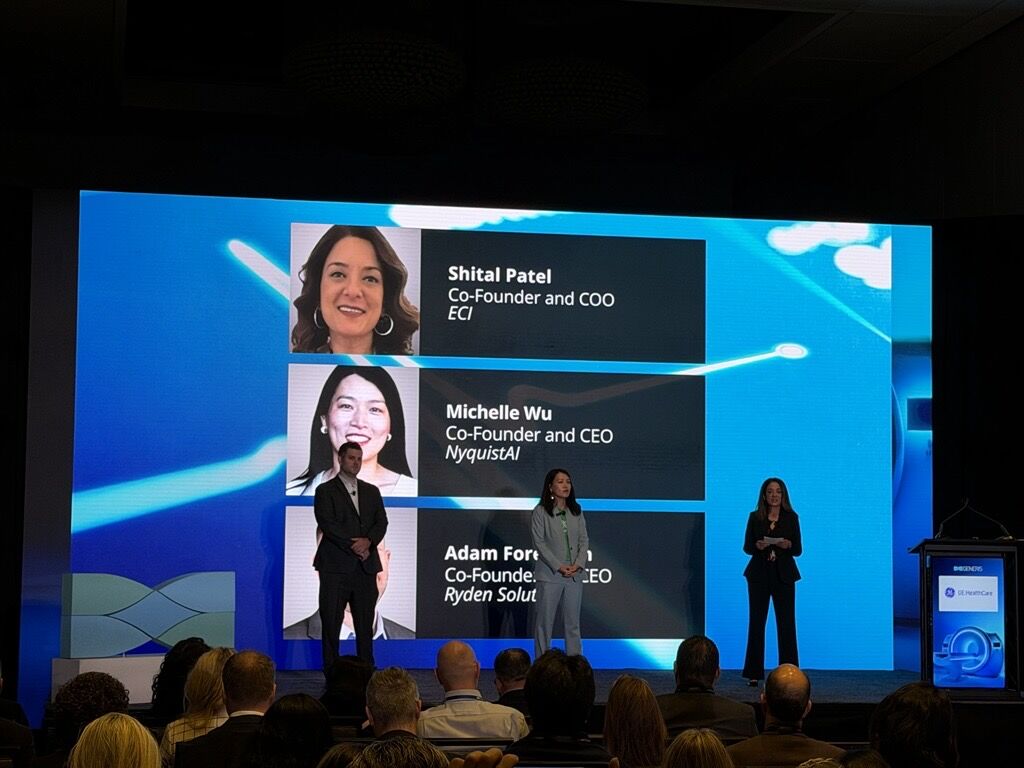
At the American Medical Device Summit in Chicago, our CEO, Michelle Wu, joined Shital Patel (Co-Founder & COO of ECI) and Adam Foresman (Ryden Solutions) for a candid discussion about AI's expanding role across the product lifecycle. What emerged was a nuanced picture of both extraordinary opportunity and thoughtful implementation challenges.
The Efficiency Revolution: From Grunt Work to Strategic Insight
The numbers tell a compelling story. Organizations implementing AI for regulatory intelligence are seeing 70% reductions in time and effort. Tasks that once required dedicated teams of two to four people manually mining FDA 510(k) databases, MAUDE reports, and EU databases can now be accomplished with a fraction of the resources.
However, what truly makes this transformational is that it's not just about doing the same work faster. "Previously, companies could only deliver information," Michelle explained. "Now they can deliver insights. The regulatory intelligence team no longer has a capacity bottleneck."
On the quality side, Adam highlighted equally impressive gains. Companies are automating device history record (DHR) reviews and saving 50-60% of their time. Corporate audits that once required four to five days are now being completed in less than one day.
The applications are remarkably diverse. AI is being deployed for regulatory intelligence, compliance automation, SOP mapping, post-market surveillance, audit readiness, QMS record reviews, and even pre-populating complaints and CAPAs. Both the FDA and at least five EU notified bodies are already using or planning to use AI in their review processes.
The Jobs Question: Elimination or Elevation?
Let's address the elephant in the room. Will AI eliminate jobs in regulatory affairs and quality assurance?
The data suggests a more nuanced reality. Research from Anthropic identifies approximately 700 jobs that will be impacted by AI, including regulatory affairs. But "impact" encompasses two distinct categories: augmentation and automation.
Automation means AI can complete a task end-to-end without human involvement. Augmentation means AI serves as a junior staff member or personal assistant, amplifying it. The gap between AI-savvy executives and those who haven't adopted these tools is growing wider.
"One of the top mistakes a VP of regulatory affairs could make is thinking AI will replace my team, so I'll have a smaller budget and less influence," Michelle cautioned. "That's actually not true. AI elevates your strategic power in the organization."
The resources freed up from automated tasks can be redirected toward higher-value activities: investigating more issues, correcting compliance problems earlier, identifying manufacturing process drifts before they become major problems, and truly embodying the continuous improvement culture that quality management systems are designed to foster.
Getting Adoption Right: Why Most AI Initiatives Fail
Organizations are spending millions on tools like Copilot and ChatGPT, only to find them gathering digital dust. Why?
"The biggest mistake you can make is to think of AI adoption as a technology rollout," Michelle emphasized. "Any AI adoption is the work of people, people, people."
Success requires a fundamentally different approach:
- Start Small and Strategic: Pick one high-impact, low-risk process. Document review for regulatory publishing. Automated regulatory intelligence checks. Something measurable that allows early wins to build organizational confidence.
- Make It Invisible: The best results come when AI runs in the background as the engine behind processes, not as something users constantly interact with. "If AI is not intended for a specific purpose," Adam noted, "it's not used for anything."
- Build It Into Your QMS: Decide which AI applications are job aids versus QMS requirements. Some tools should be recommended; others should be mandatory. For mandatory applications, integrate them into your quality system and validate accordingly.
- Champion the Change: 80% of AI adoption success comes from change management and leadership mindset. You need strong, visionary leaders with a consistent attitude toward AI. You need champions on both the technical and business sides who understand and respect each other's workflows.
- Treat It as a Partnership: AI adoption isn't a project with a finish line. It's not something you buy and check off a list. It's an ongoing process that evolves with your learning, your people, and your workflows.
The Validation Challenge: How Do You Validate a Moving Target?
This is the billion-dollar question. Traditional validation processes assume static systems. But AI tools present a fundamentally different challenge.
The reality is that there's no single validation method that fits all AI tools. Some platforms like ChatGPT and Copilot are constantly learning with opaque algorithms. Others are more static and transparent about their mechanisms.
Michelle outlined a practical three-step approach:
First, treat AI like any other system that impacts compliance. It requires traceability, transparency, and continuous certification. As a regulatory leader, you need to articulate how your AI tool works because that's what regulators will expect.
Second, define your use case early. Using AI to generate regulatory intelligence for strategic decision-making falls outside FDA regulation. But if AI drafts or corrects your final submission, you need to identify what decisions or processes it supports. What are your criteria for accuracy, bias, and reproducibility? Can you reproduce the results?
Third, create a feedback loop. Subject matter experts and technical leaders should review and challenge outputs. Document every iteration. Remember that validation isn't a one-time event, similar to IQ/OQ/PQ revalidation plans's how quickly you can start small, learn fast, and scale what works. The organizations making that leap today are positioning themselves to lead the industry tomorrow.